Where the Race Is Lived
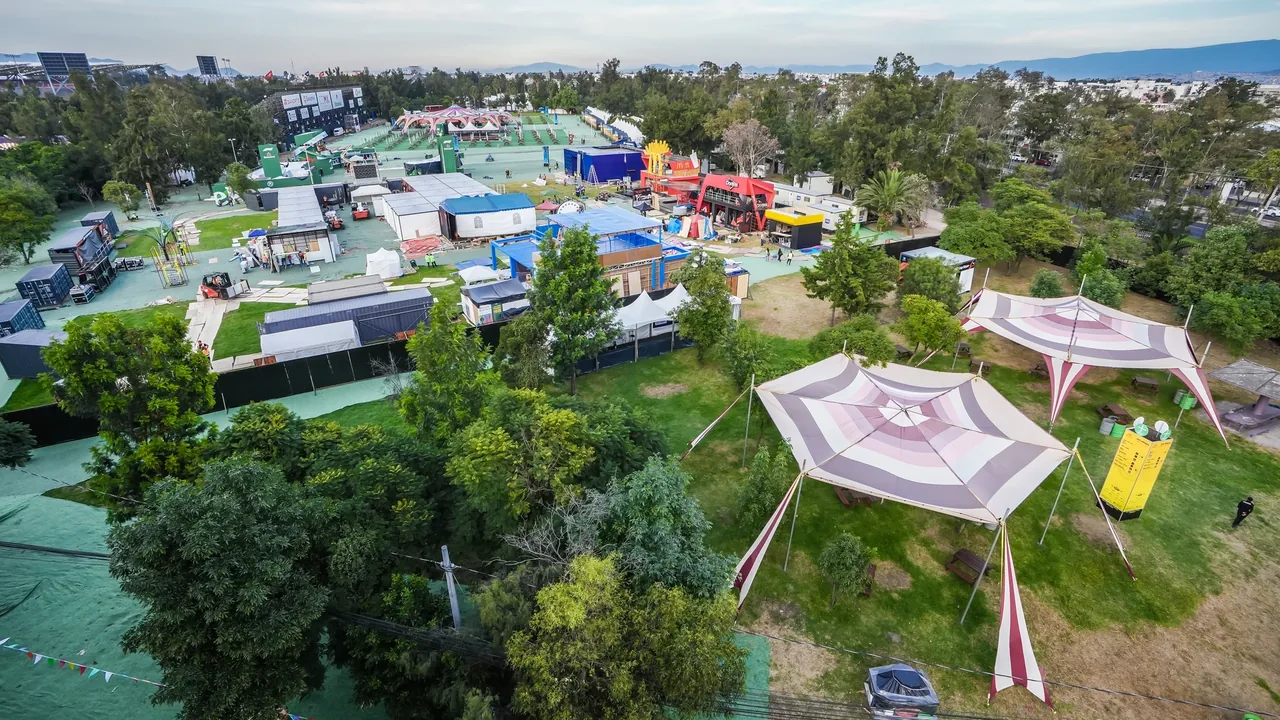
The Mexico City Grand Prix is run at the Autódromo Hermanos Rodríguez, inside the Ciudad Deportiva Magdalena Mixhuca, on the city’s east side.
The track was born in a classroom. Civil engineer Óscar Fernández Gómez Daza designed it as his thesis at UNAM and defended it in 1955; one of his examiners proposed building it, and the work finished in 1959, as El País tells it. It was first called the Autódromo de la Magdalena Mixhuca; later it took the name of brothers Ricardo and Pedro Rodríguez, Mexico’s first great racing drivers, according to Formula 1. It is owned by the Mexico City government.
It sits at 2,240 meters above sea level and its layout measures 4.304 kilometers. In 2015, Felipe Massa reached 364 km/h here, according to the Autódromo itself.
For 2026, works were announced with an investment of more than MXN $200 million: a new 6.5-centimeter asphalt layer, drainage and kerb maintenance, and work on the Pit Building and Paddock.
The zones have names of their own: the Moisés Solana Complex (turns 1 to 3), the Jim Clark Straight, the Ese del Lago, the Héctor Rebaque chicane, the Esses (turns 7 to 11) and Estadio GNP, which begins at turn 12, Adrián Fernández. The Rebaque chicane is among the slowest sections, and from there the cars can be seen in the most detail.
To get there, Ticket2Ride is a round-trip shuttle bought on Ticketmaster up to two days ahead, with departures from Auditorio Nacional, Coapa, Condesa, Estadio Banorte, Hipódromo, Interlomas, Lindavista, Mundo E, Perisur and Plaza Carso, among other points.
This is how we show Mexico. #GenteMéxico
Story tips and partnerships: https://wa.me/524461426964